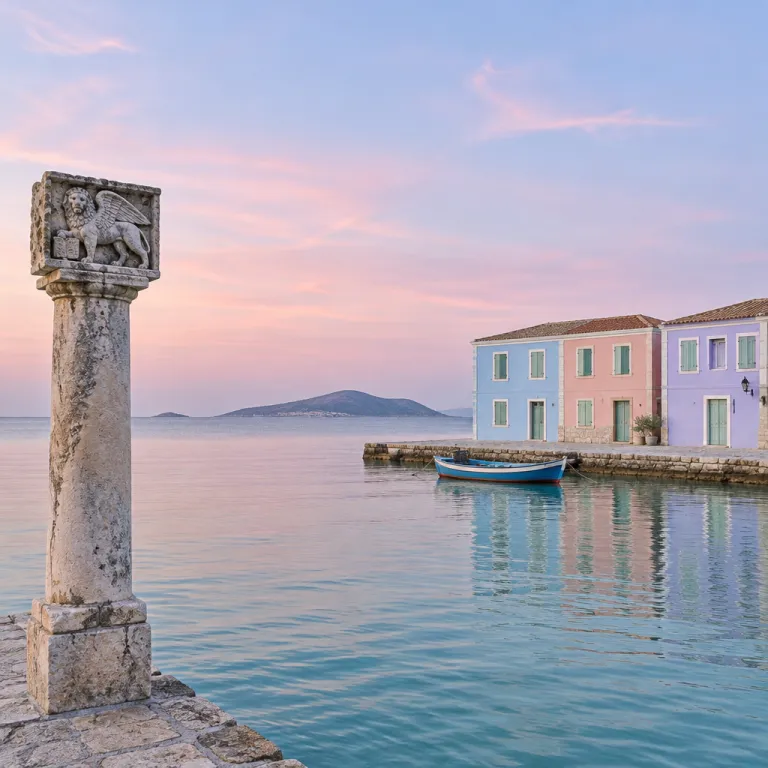
Venetian Greek islands culture heritage travel for modern couples
Venetian Greek islands culture heritage travel is not an abstract theme. It becomes tangible the moment your ferry glides into a Greek island harbor and you see a winged lion carved above a gate or a stone arsenal along the quay. For couples planning a Greece vacation with a focus on history culture and refined stays, following the Lion of Saint Mark across the Greek isles turns a simple island tour into a curated narrative.
The Venetian Republic ruled parts of Greece for roughly six centuries, using naval dominance, trade agreements and fortified ports to control key islands. Major possessions included Crete (known as the Kingdom of Candia, under Venetian rule from 1204 to 1669) and Corfu (under Venice from 1386 to 1797), and that long duration of Venetian control still shapes how several Greek islands feel today, from the arcaded streets of Corfu city to the stone dovecotes of Tinos island. When you plan nights in Athens, then continue to a Greek island chain in the Ionian Islands or the Aegean Sea, you are tracing the same maritime routes that once linked Venice to the eastern Mediterranean and even to Greece–Turkey trade corridors.
For luxury travelers, the appeal lies in pairing this deep history with premium hotels that sit within walking distance of major Venetian sites. You wake up in a suite overlooking an ancient harbor, then stroll five minutes to explore ancient ruins or a fortress before the tour groups arrive. By night, you return to a terrace where the same sunset once guided ships of the Knights of Saint John, who were based in Rhodes and later Malta, and merchants from across Europe into these sheltered bays, turning each evening into a living history culture experience.
Corfu and the Ionian islands: where Venice meets a Greek city
Corfu is the most obvious starting point for Venetian Greek islands culture heritage travel, because its Old Town feels like a small Italian city layered over a Greek island soul. Four hundred years of Venetian rule turned Corfu city into one of the most European corners of Greece, with pastel façades, arcades and narrow lanes that still echo with Italianate names. When you book a hotel here, choose a property facing the Spianada square or the Liston promenade so that the island’s history culture is literally on your doorstep and you can step out for an espresso as the first church bells ring.
The Old Fortress, or Palaio Frourio, guards the entrance to the harbor and remains one of the most atmospheric sites in the Greek islands. From its ramparts you see the curve of Corfu island, the deep blue of the Ionian Islands and, on clear days, the distant outline of Greece–Turkey borders across the sea. A stay of at least three nights in Corfu allows time to wander the Liston, visit local museums that explain how Venice used ships, armies and diplomatic missions to secure these islands, and still enjoy relaxed afternoons on nearby beaches reached by a short taxi or bus ride of fifteen to thirty minutes.
For couples, the most rewarding hotels are those in restored mansions within the UNESCO Heritage listed Old Town, where you can walk to the Spianada in minutes. Night Corfu has a softer rhythm than Mykonos island or Santorini, with piano bars tucked into vaulted basements and wine bars hidden in side streets. If you want to extend your Greece vacation, consider adding another Ionian island such as Paxos, where smaller harbors still show traces of Venetian stonework and quiet coves offer clear water and uncrowded beaches reached by a one hour hydrofoil from Corfu, making it an easy two or three night add on.
Crete, Naxos and Paros: fortified harbors and marble legacies
Further south, Venetian Greek islands culture heritage travel leads naturally to Crete, where the scale of the architecture reflects the island’s strategic importance. Heraklion’s Koules fortress dominates the harbor, its massive walls a reminder that Venice once controlled vital trade routes between Greece and the wider Europe. Venice ruled Crete from 1204 until 1669, and staying in a luxury hotel along the waterfront places you within a short walk of both the fortress and the city’s lively restaurants, allowing you to balance history culture with contemporary Cretan cuisine and evening strolls along the sea walls.
On the north coast, Chania and Rethymno showcase a more intimate Venetian imprint, with harbors framed by lighthouses and stone arsenals. Chania’s Venetian harbor, crowned by its lighthouse, is one of the most romantic evening walks in any Greek island city, especially when you can return on foot to a refined hotel in the old town. Rethymno’s Fortezza rises above a maze of streets where Ottoman and Venetian details mingle, creating a layered backdrop for couples who want more than just beaches from their Greece vacation and prefer evenings in atmospheric quarters with tavernas set under bougainvillea.
In the Cyclades, Naxos and Paros add another chapter to this story of Greek islands shaped by Venice. Naxos town’s Kastro quarter climbs from the port to a still active Catholic cathedral, while the Portara gateway, built from ancient marble, greets every ferry as a monumental frame for the Aegean Sea. Across the water, Paros’s Kastro in Parikia incorporates marble from ancient ruins, so a stay in a nearby hotel lets you walk from your suite to see how Greek, Venetian and earlier cultures literally share the same stones and create a distinctive island skyline that glows pink at sunset.
Tinos and the Cyclades: dovecotes, saints and quiet nights
Tinos offers one of the most subtle expressions of Venetian Greek islands culture heritage travel, especially appealing to couples who prefer quiet villages over crowded beaches. Scattered across the island are more than six hundred dovecotes, or peristeriones, ornate stone towers that Venetians encouraged local Greek farmers to build for raising pigeons. Choosing a hotel in the interior villages rather than the main port lets you wake to church bells, walk through terraced hills and reach these dovecotes on foot or with a short drive, often passing marble fountains and shaded squares where locals gather for coffee.
Unlike Santorini or Mykonos island, Tinos remains largely focused on local life, religious festivals and traditional crafts. That makes it ideal for travelers who want to experience a Greek island where Venetian influence is woven into daily routines rather than staged for a tour. You can spend your days visiting marble workshops, hillside chapels and dovecote filled valleys, then return to a refined guesthouse where the owner might share stories about how their ancestors navigated between Venetian landlords and Orthodox traditions, adding personal context to the island’s history culture and giving you a sense of how faith and farming shaped the landscape.
From Tinos, it is easy to connect by ferry to Santorini and Mykonos, where the Venetian legacy is less architectural but still present in the way harbors and lanes are organized. A combined Santorini Mykonos itinerary can still fit within a broader Greece vacation focused on history culture, especially if you balance caldera views and nightlife with visits to smaller archaeological sites. For couples, alternating nights on a quieter Greek island like Tinos with a few nights on more famous islands keeps the rhythm of the trip varied and prevents fatigue from crowds, particularly in July and August when visitor numbers peak.
Designing a Venetian heritage itinerary from Athens to the islands
To turn Venetian Greek islands culture heritage travel into a coherent journey, start with at least one night in Athens before sailing out. Use that night in Athens to visit the Acropolis Parthenon and the nearby museum, grounding yourself in the ancient history that predates Venice but still shapes every Greek city and island. From there, you can fly or sail to Corfu, Crete or the Cyclades, following a route that mirrors the old maritime trade networks of the Venetian Republic and connects major island groups.
Many couples pair nights in Athens with a mainland circuit that includes Olympia and Delphi, sometimes extended to Delphi Meteora, before heading to the islands. While these sites are not primarily Venetian, they are essential to understanding how ancient ruins and sacred landscapes made Greece a prize for powers from Venice to the Ottomans and the Knights of Saint John. A classic Athens Olympia Delphi Meteora loop followed by a week across the Greek islands gives you both UNESCO Heritage landmarks and the softer pleasures of island nights, with ferries often taking two to five hours between nearby ports depending on the route and season.
When you choose hotels, prioritize locations that place you within walking distance of key sites rather than isolated resorts. A harbor front suite in Chania, a townhouse in Corfu’s Old Town or a restored mansion in Naxos Kastro allows you to step directly into layered history culture each morning. For more architectural inspiration across the Greek isles, including islands with neoclassical and naval heritage beyond the Venetian story, explore our guide to Greek islands where architecture is the main attraction, then weave those stops into your broader Greece vacation and adjust the pace so that no single ferry leg dominates the day.
How Venice shaped the islands: symbols, fortresses and modern stays
Understanding why these Greek islands look the way they do makes Venetian Greek islands culture heritage travel far more rewarding. Venice expanded into Greece to control trade routes, access resources and project power across the eastern Mediterranean, using ships, armies and diplomatic missions to secure around twenty key islands. The Lion of Saint Mark, symbol of Venice, representing Saint Mark, still appears on gates, fortresses and coins in places like Crete and Corfu, a visual thread that links each island stop on your tour and helps you read façades as you wander.
On Crete, the massive Koules fortress in Heraklion and the harbors of Chania and Rethymno show how Venice turned natural bays into fortified hubs. In Corfu, the Old Fortress and the New Fortress frame a city that feels both Greek and Italian, while on Naxos and Paros the Kastro quarters reveal how Venetians reused marble from ancient ruins to build new defenses. Even on islands better known today for beaches, such as parts of the Aegean Sea and the Dodecanese near Rhodes, you can still find traces of Venetian walls alongside structures linked to the Knights of Saint John and later Ottoman rule, creating a palimpsest of empires in a single skyline.
For modern travelers, the most interesting hotels are those that engage with this layered history rather than ignoring it. Some properties occupy former mansions built during the Venetian or later neoclassical periods, while others frame views of harbors and fortresses that once anchored maritime trade between Greece and wider Europe, including routes toward Greece–Turkey ports. When you choose such stays, every evening on your balcony becomes another chapter in a long story of ships, saints and shifting empires across the Greek isles, especially if you visit in late spring or early autumn when the light is soft and the streets are quieter.
FAQ
Which Greek islands show the strongest Venetian influence for travelers ?
Corfu, Crete, Naxos, Paros and Tinos are among the Greek islands where Venetian architecture and planning remain most visible. Corfu city, with its Old Fortress, Spianada square and Liston promenade, offers the clearest sense of a Venetian style city in Greece. Crete’s harbors at Chania, Rethymno and Heraklion, along with the Kastro quarters of Naxos and Paros, provide additional key stops for a Venetian themed tour that can be combined with quieter islands for a balanced itinerary of ten to fourteen days.
How many Greek islands were controlled by the Venetian Republic ?
Historical records indicate that Venice controlled around twenty Greek islands over a period of roughly six hundred years. Major islands included Crete and Corfu, along with several in the Ionian and Aegean seas that served as military outposts and trade hubs. This long duration of control explains why Venetian symbols and fortifications remain so prominent in parts of the Greek isles today, especially in fortified ports and Kastro districts that still follow the street patterns laid out in the late medieval and early modern periods.
Can I combine Venetian heritage sites with famous places like Santorini and Mykonos ?
It is easy to combine a Venetian heritage itinerary with time on Santorini and Mykonos island. Many travelers start with Corfu or Crete, then continue through the Cyclades to include Naxos, Paros, Santorini and Mykonos in a single Greece vacation. This approach lets you balance visits to fortresses and Kastro quarters with more relaxed days on beaches and evenings in lively island towns connected by regular ferries, which in high season may run several times per day between the main hubs.
How should I plan nights in Athens around a Venetian islands trip ?
Plan at least one night in Athens at the beginning of your trip to visit the Acropolis Parthenon and key museums. Some travelers add a short mainland loop to Olympia, Delphi and Meteora before sailing to the islands, creating a broader history culture framework. Returning for a final night in Athens at the end of the journey also simplifies international flights and allows a last evening in the city, perhaps with a walk through Plaka to reflect on how the trip linked ancient and early modern sites.
Are Venetian sites in Greece recognized as UNESCO Heritage locations ?
Several areas influenced by Venice form part of UNESCO Heritage listings, even when the designation focuses on broader historical value. Corfu’s Old Town, for example, is recognized for its fortified Mediterranean port character, which includes strong Venetian elements. When planning Venetian Greek islands culture heritage travel, checking UNESCO Heritage descriptions can help you identify the most significant fortified cities and harbor complexes and decide where to allocate extra nights.
Sources
Hellenic Ministry of Culture and Sports ; UNESCO World Heritage Centre ; Greek National Tourism Organisation.