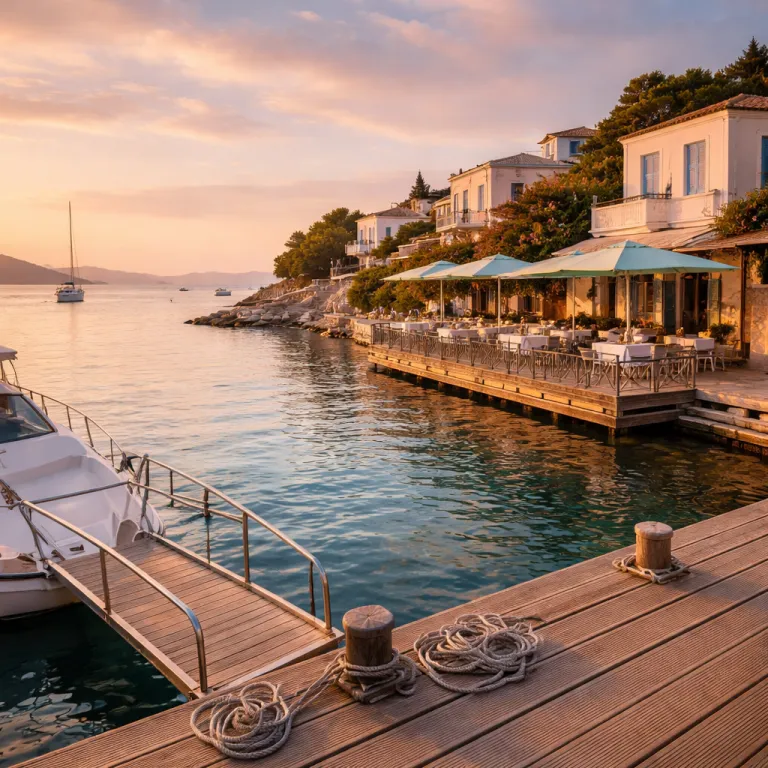
From marina status symbol to serious dining destination
Greece dock dine yacht restaurants have moved from novelty to strategy. When a global BoatBooker study analysed more than 1,000 destinations in 45 countries in 2023, it confirmed what regulars to the islands already felt at the dock. Greece ranked first worldwide with 349 restaurants that you can reach only by boat, and that single data point is quietly rewriting the economics of waterfront hospitality across the islands.
For luxury hotels in the Greek Islands, the rise of dock-and-dine tourism is both opportunity and provocation. These sea-access restaurants now compete directly with hotel fine-dining rooms for the same guest, often the same “journey dinner” slot, yet they offer a different kind of experience shaped by water, wind and the rhythm of arriving boat traffic. The guest who once stayed in, ordered a tasting menu and a rare bottle now weighs that against a ten-minute private boat transfer to a taverna with boat-only access and a table almost touching the water.
The economics are stark. A waterfront restaurant with yacht access can turn a modest beach or rocky cove into one of the most coveted dining destinations in the Aegean, especially when it is accessible exclusively by sea and framed as one of the island’s hidden gems. For hotel owners, that means the best table on the island is no longer automatically under their roof, and the most photogenic view for the guest’s sunset photo might be at a low-slung jetty bar where the fisherman’s wife sets the table when she sees the boat. Greece dock dine yacht restaurants have become a parallel luxury ecosystem that hotels ignore at their peril.
BoatBooker’s research platform did more than crown Greece as a leader in dock-and-dine tourism; it mapped where high-value guests are actually eating. The BoatBooker study shows that Hydra, Paxos and Symi sit at the centre of this shift, with the Hydra–Paxos–Symi sailing corridor now shorthand for serious maritime dining experiences. For hotel booking platforms like stay-in-greek-islands.com, that means curating stays not just by room category and rating stars, but by proximity to the most compelling dock-and-dine options and by the quality of the surrounding boat tours infrastructure.
What is dock and dine tourism? At its simplest, it is dining at restaurants accessible exclusively by boat, where the pier or mooring replaces the parking lot and the tender becomes part of the evening ritual. Why is Greece leading in dock and dine destinations? The answer lies in its numerous islands, intricate coastline and rich maritime culture, which together create ideal conditions for boat-access dining to flourish.
Methodology note: The 2023 BoatBooker report referenced here is a proprietary industry analysis shared with partner marinas and hotel groups; public summaries are limited, so figures cited in this article are based on that internal briefing rather than an open-access publication.
Hydra, Paxos, Symi: where the best table floats offshore
On Hydra, the most interesting dining experiences now unfold just beyond the harbour walls. You arrive by boat ferry from Piraeus, check into a stone mansion hotel above the port, then realise the island’s most coveted dining destinations sit on tiny jetties where arriving boat traffic is as much part of the theatre as the food. Greece dock dine yacht restaurants here are not about white-tablecloth formality; they are about the choreography of sea access, the clink of glasses against hulls and the way the late light hits the water.
Take the Hydra–Paxos–Symi triangle as a working case study for the executive traveller extending a business trip. On Hydra, a short private boat hop from the main dock lands you at a restaurant perched above a narrow cove, where the only bar is a few stools on the rocks and the menu reads like a love letter to the island’s fishermen. In Paxos and Symi, similar boat-access-only spots such as Vrika Bay tavernas or Symi’s tiny jetty restaurants have become global reference points for Greece dock dine yacht restaurants, with review counts on specialist platforms that rival Michelin darlings and a guest mix that blends yacht owners, charter clients and hotel guests who have slipped away from their resorts for one serious journey dinner.
For hotel bookers, the question is not whether these restaurants exist, but how to integrate them into a stay without sacrificing comfort. The smartest luxury properties now schedule their own boat tours that double as transfers to partner restaurants, turning a simple dine-out into a curated dining experience with guaranteed dock space and a reserved table. Others lean into their own kitchens, bringing in chefs who have staged at these dock-and-dine hotspots and reinterpreting the same island food language on property, a trend we explore in depth in our guide to island kitchens worth the ferry.
The tension is productive. When a guest can choose between a candlelit terrace with a panoramic view and a jetty table where their boat rocks gently against the dock, both the hotel restaurant and the sea-access taverna must justify their price point. That pressure is raising standards across the islands, from wine lists that finally reflect the depth of Greek vineyards to bar programs that treat ouzo and tsipouro with the same respect as Japanese whisky. For travellers using a premium booking website, the new mark of a serious island property is not just its spa or pool, but its fluency in the language of Greece dock dine yacht restaurants and its ability to secure the right table at the right cove.
As one Hydra hotelier put it in a 2023 industry roundtable, “If I cannot get my guest a mooring and a table at the jetty they’ve seen on Instagram, I have not done my job as a luxury host.” That mindset shift, from guarding in-house restaurants to orchestrating the whole dock-and-dine circuit, is reshaping how concierges think about every evening on the island.
How dock-and-dine reshapes hotel strategy across the archipelago
Luxury hoteliers in Greece have long sold the fantasy of never needing to leave the property. Dock-and-dine tourism challenges that narrative by making the journey dinner itself the highlight, especially when the restaurant is accessible exclusively by sea and framed as a once-in-a-lifetime dining experience. Greece dock dine yacht restaurants turn the boat, not the lobby, into the evening’s grand entrance, and that shift forces hotels to rethink what “on site” really means.
On islands where the coastline is scalloped with coves, a hotel that ignores boat access is effectively ceding its highest-spending guests to independent operators. The smartest properties now treat the boat as an extension of the concierge desk, arranging private boat transfers to specific dining destinations and timing departures to coincide with the best light for a photo as you glide past the headland. Some even integrate curated boat tours that stop at multiple restaurants and bars over the course of an evening, turning Greece dock dine yacht restaurants into a progressive feast that starts at the hotel pier and ends back at the suite’s plunge pool.
This is not just about glamour. When BoatBooker’s global study highlighted Greece’s 349 boat-accessible restaurants, it signalled a structural shift in how tourism revenue flows through the islands. A guest who spends on fuel, mooring, food and drinks at a remote beach restaurant is injecting money into communities that may never see a cruise ship, and that aligns with the more sustainable, low-density model many islands now prefer over mass boat ferry arrivals. For hotel booking platforms, the opportunity lies in mapping these hidden gems and pairing them with properties that share a similar ethos, much as we do in our Aegean-focused guide to wine routes between Santorini and Crete.
There is also a quiet arms race in service. When a guest steps off a tender onto a wooden dock and is greeted by name, handed a chilled towel and seated at a table with a perfect view of the water, they are experiencing five-star choreography without ever seeing a front desk. Hotel general managers are watching closely, borrowing elements of that choreography and, in some cases, hiring talent directly from these restaurants and bars. The result is a more fluid hospitality landscape where the line between hotel, restaurant and boat blurs, and where the most memorable dining experiences may unfold far from the marble lobby.
By the numbers: Local marina authorities in the Ionian report that peak-season demand for short-stay moorings near popular dock-and-dine venues has risen by roughly 20% over the past five years, with average per-guest spend at remote coves often exceeding €120 once fuel, mooring fees and dinner are included. While figures vary by island, that pattern helps explain why hotel development is increasingly clustered around natural harbours rather than inland hilltops.
Exclusivity, access and the future guest of the Greek islands
The obvious critique of Greece dock dine yacht restaurants is that they are inherently exclusive. When a restaurant is accessible exclusively by private boat or tender, it risks becoming a stage set for a narrow slice of global tourism rather than a living part of island culture. Yet on the ground, the picture is more nuanced, and the way hotels respond will determine whether this trend enriches or erodes the character of the islands.
In places like Hydra, Paxos, Symi and smaller destinations off the main ferry routes, many of the most atmospheric restaurants began as simple beach tavernas serving local food to fishermen and families arriving boat-side. Dock-and-dine fame has brought rating stars, higher review numbers and a new clientele, but in many cases the ownership and kitchen teams remain deeply rooted in the island. The challenge for luxury hotels is to channel demand in a way that respects capacity, avoids overwhelming fragile coves and keeps the dining experiences aligned with local rhythms rather than cruise ship timetables.
For the business-leisure traveller, the question is how to engage with this world thoughtfully. Booking through a specialist platform that understands both hotel inventory and maritime logistics means your journey dinner can be timed around weather, boat tours schedules and the realities of sea access, rather than just a glossy photo on social media. It also means you can choose whether to arrive by boat ferry, charter or smaller tender, and whether to prioritise a quiet cove with a single bar and restaurant or a livelier beach with multiple restaurants and a more social dock-and-dine scene.
Looking ahead, the most interesting innovation may come from collaboration rather than competition. Imagine hotel packages that include a curated series of dining experiences at Greece dock dine yacht restaurants across several islands, linked by private boat transfers and framed as a moving study of Aegean cuisine, much like a floating version of our Aegean wine route. In that model, the hotel becomes the anchor, the boat the connective tissue and the dock the new dining room door, with the guest moving seamlessly between suite, sea and table.
Key figures behind Greece’s dock-and-dine rise
- BoatBooker’s global study of more than 1,000 destinations in 45 countries identified 349 restaurants in Greece that are accessible by boat, confirming the country as the world’s leading dock-and-dine tourism destination and giving hotel planners a concrete map of where high-value maritime dining is concentrated.
- The same study, conducted with local tourism boards, shows that these 349 boat-accessible restaurants are spread across multiple islands, with clusters around Hydra, Paxos and Symi, which helps explain why these island groups now feature prominently in luxury yacht itineraries and premium hotel marketing.
- Greece’s dock-and-dine leadership sits within an archipelago of roughly 6,000 islands and islets, meaning that even with 349 identified restaurants there is significant room for growth in sea-access dining, particularly on lesser-known islands that are beginning to attract investment in small piers and upgraded kitchens.
- Travel and Tour World’s recognition of Greece as the top global dock-and-dine destination coincides with a broader rise in yacht-based tourism, with local authorities reporting increased demand for mooring spaces near restaurants and bars, a trend that directly influences where new luxury hotels choose to open or renovate.